
Voyager 1 reaches one light-day from Earth, with no data received since Nov. 14
NASA says the 1977 probe passed the mark at 2:16 a.m. PST on Nov. 18. Engineers have not received science or engineering data from it since Nov. 14.

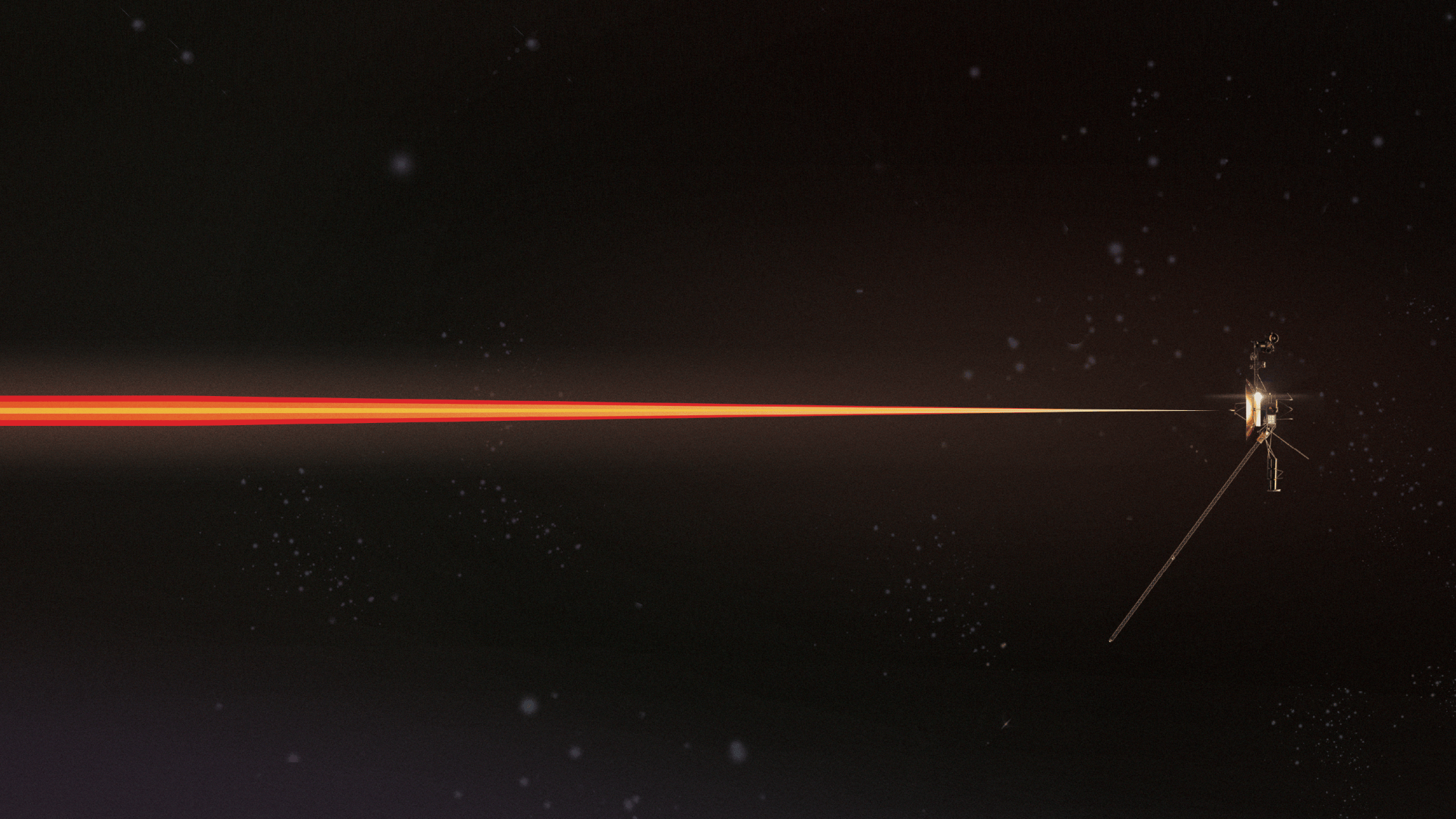
A radio message sent to Voyager 1 now takes a full day to arrive, and the reply takes another day to come back. At 2:16 a.m. PST on Nov. 18, while most of Vancouver was asleep, the probe reached one light-day from Earth.
A light-day is the distance light travels in 24 hours, about 25.9 billion kilometres (16.1 billion miles). NASA said Voyager 1, launched in 1977, is travelling at roughly 61,155 km/h (38,000 mph). The agency's clock read 5:16 a.m. EST at the moment of the milestone.
The achievement comes with a complication. The Voyager team has not received science and engineering data from the spacecraft since Nov. 14, and engineers continue to analyze the issue. Mission engineers were still able to confirm the distance, using the probe's carrier signal along with trajectory calculations.
Suzanne Dodd, the Voyager project manager, said signals take 24 hours each way between Earth and Voyager 1. She said the team listens to the spacecraft daily and sends commands weekly.
Voyager 1 became the first human-made spacecraft to enter interstellar space in 2012. Its twin, Voyager 2, crossed the heliosphere boundary in 2018 on a different trajectory. Both probes launched in 1977 to take advantage of a rare planetary alignment.
Both also depend on plutonium, which slowly depletes. Each probe loses about 4 watts of power every year. Earlier this year, engineers swapped three devices on Voyager 1 for lower-power alternatives, a move NASA described as not without risk.
That energy-saving effort is expected to keep the current science instruments running until at least the 50th launch anniversaries next summer.
Sources
Facts first. Context second. Sources always. This story was prepared with AI assistance from the sources listed above and reviewed by a Northline editor before publication. How we use AI · Report an error